Tuesday, 22 October 2013

WHAT'S IN A TITLE?


WHAT’S IN A TITLE?

 A Writer’s Notebook

No. 43, October 2013


James Watson
Friends and contributors
 

PACKED OCTOBER EDITION: Choosing that Title/Laura Solomon and ‘Imitation of Life’/Aethelflaed: a neglected queen/Letter to Marcel Marceau

CONTENTS

Notes in passing: What’s in a title?

Imitation of Life

Part 2 of extract of Laura Solomon’s strikingly original Novel

Aethelflaed: Lady of the Mercians

Ned Baslow to Marcel Marceau

Kindle Editions (2) Talking in Whispers

Picture:cupboards, Neolithic style. Skara
Brae, Orkney.

 
NOTES IN PASSING
What’s in a title?

Take the Bard: how would he get away these days with such loose and casual titles as Much Ado About Nothing or As You Like It; titles seemingly conjured up over breakfast or after a beery night out; even invented five minutes before the first rehearsal? Then there’s Twelfth Night – specific, locatable; until that is, the casual subtitle, Or What You Will.

Time, though, mellows, burnishes. The titles are afloat in our subconscious, enriched by accretions of memorable experience. What may have started out simple and casual has become the poetry of experience and memory. Comedy permits the casual-imaginative, but the serious seems to demand something more exact: Hamlet Prince of Denmark, Julius Caesar (not The Ides of March which would have added a touch of mystery), King Lear.

In fact 23 of Shakespeare’s plays are eponymous if Romeo & Juliet, Troilus & Cressida and Anthony & Cleopatra are included. All of the above already possessed resonance, being real historical characters. In comparison, Dickens had a starter for nothing with David Copperfield, Oliver Twist or Barnaby Rudge, needing to establish their familiarity-rating by dint of the strength of the author’s storytelling ability and reputation. Reader attraction hits a higher pitch with Great Expectations. We are teased into guessing what those expectations might be while at the same time guessing that expectations will be disappointed before being fulfilled.

The structure of titles
How many words might be required to form a title that attracts, is memorable and stands out from the competition? There’s infinite choice, which can be an author’s headache: a one-word title, two-word, three word or extended title, the sort that makes a pitch, a statement or quotes from a source? Shakespeare might have justified his four-word title As You Like It on the grounds that it provides easy access to the familiar. It suggests that the title is part of a greater whole, part of a discourse already in operation.

With one-word titles all the eggs are in one basket. Jane Austin’s Persuasion suggests there’s a process about to go on, and that someone, resistant to persuasion, will eventually see the light. Michael Hanneke’s film Hidden intrigues: what’s hidden and why? Costa Gavras’ movie set in Chile, Missing, has the same power of suggestion – who’s missing, why, and should we be concerned?

One-word titles have, yes, singular impact. Hitchcock’s Vertigo sounds good and looks good on paper or on screen; it might well remind us of our own fear of heights. Equally such titles can leave a potential audience in two minds, as with Amy Heckerling’s film Clueless or risk turn-off like John Huston’s Misery or simply baffle like Jeanne-Pierre Jeunet’s Mcmacs.

Two to tango?
Two-word titles pose a more hazardous choice than one might anticipate. The recent BBC TV thriller The Fall strives for a double-meaning (I guess), presumably hinting at Belfast’s Falls Road. It’s simple, there’s implied action and it sticks in the mind, but two-worders can come a cropper: Andrea Arnold’s Fish Tank, for example, or John Cameron Mitchell’s Rabbit Hole (both of them excellent films, alas with turn-off titles). No word evokes a response, though in the case of Lorca’s Blood Wedding or Raoul Walsh’s White Heat the two words act upon one another like match to touchpaper. The titles activate.

 Three’s a wheeze
What two-word titles generally fail to do is support the binary framing of most stories, the contrasting elements (good, evil; violent, peaceable; rich, poor) that are integral to fictional narratives (as they are of news narratives). With the handy use of ‘and’ we have titles that suggest drama and conflict: War & Peace, Crime & Punishment, Pride & Prejudice. With such titles, the author’s ambition is manifest; through ‘binary opposition’ we’re likely to be in for an epic.

The ‘either or format’ breeds the bad as well as the good, for example movies such as Love & Bullets, Love & Basketball, Love & Sex, Love & Money or Love & Human Remains.

Which raises the question of whether ‘love’ in a title allures or off-puts. Gabriel Garcia Marquez’ Love in the Time of Cholera scores because whatever the title there’d be avid readers of Marquez; also because it suggests a narrative where ‘Love’ has nothing to do with romance.

‘Who’, ‘Where’ and ‘When’ have proved popular title openers, particularly in movies: Who Dares Wins, Where the Sidewalk Ends, When Worlds Collide catch the eye and intrigue. Then there’s From and To suggesting transformation, or a meaningful journey: From Here To Eternity.

 Four’s a doddle
Room for the lyrical, the witty, the quotable, the oddball, the oblique, the mysterious is provided by the four-word title. Such titling generally keeps the content secret. Thus Whistle Down the Wind is catchy, poetic, memorable but unhelpful about the story of children discovering an escaped prisoner who they think is Jesus.

Four-wheel titles furnish us with images that stick in the mind: Fiddler on the Roof, Les Enfants du Paradise, Bring Up The Bodies, The Heart of Darkness and The Ragged Trousered Philanthropists.

Five-up and counting 
Five word titles often incorporate action: Amoldovar’s Tie Me Up Tie Me Down appears to be more catchy than informative – until you watch the film (and realise that it means what it says). Stieg Larson realised that his initial four-word title Men Who Hate Women was saying too much, too obviously. He later opted for a five-worder with a compelling image, Girl With The Dragon Tattoo, deleting the ideology and inserting mystery and vivacity.

Five words are no guarantee of quality or effectiveness, as the 1968 film Mumsy, Nanny, Sonny & Girly illustrates. Conversely, an all-time classic title such as Never Give A Sucker An Even Break tagged a movie that sank without trace and without regret.

 What it says on the tin
Titles alert us by saying how it is, or will be, warning the audience about challenges ahead. Thus with Anna Perera’s Guantanamo Boy, get ready for an uneasy voyage. Expect few laughs in Pinter’s Betrayal. A little more guesswork is required in two excellent teen novels by Larry O’Loughlin, Is Anyone Listening? and Breaking the Silence.

Bad titles seem to outnumber good ones ten to one. With films in particular it seems that so much attention and energy have been spent in making the movie in the first place that titles have been a last-minute afterthought. Of course you can try too hard as with the 1971 movie Who Is Harry Kellerman And Why Is He Saying These Terrible Things About Me?
 
Make it memorable

If only for the purpose of reference, of being able to recall a novel, a play, a film or a TV drama in conversation, titles should strive to be memorable; thus the alliterative, the striking, the unexpected, sometimes even the outrageous aid recall. So, it would seem, memorability is a key criterion in title-making. Perhaps that was what Shakespeare was thinking when he titled Much Ado About Nothing, Hardy when he opted for Far From the Madding Crowd, Dylan Thomas when he conjured up Under Milk Wood, J. Lee Thompson when he decided to retain the title of Christopher Landon’s novel for the film Ice Cold in Alex, or the historian Dee Brown when he came up with that five-star title Bury My Heart At Wounded Knee.

Readers: why not send in your top five great titles and top five awful ones?

                                                                              
 I, however, had a secret. Lettie had been right; a young babe cannot live by Fanta alone. Unbeknownst to my adoptive Ma, I had been snacking on the sly. And unbeknownst to me, she got down upon her knees one evening when it was still light and pushed her eye up to the keyhole set into the cellar door and bore witness to her over-sized daughter crawling across the basement floor, snatching up bugs and insects from the dirt and stuffing them into her gob.

 Laura Solomon: An Imitation of Life (Solidus, 2009)
Extract 2 of her novel, published by kind permission of the author.

After three weeks in the cellar, my feeding difficulties escalated. I would take down none of the milk and nothing of anything else either. To me, it was all abject. Lettie tried using artificial flavouring: banana, vanilla, chocolate, strawberry. I was not interested. She attempted other liquids: orange juice, Coca Cola, lemon barley water, ginger ale, coffee, beer. I grew pale and wan, sallow, my cheeks became cold hollows, my big limbs began to wither. Eventually she struck gold, or, rather, orange. She poured Fanta down the hose and I guzzled like a baby calf at the teat. Fanta was the answer. And it remained the only thing I would drink for the next month and a half. Lettie figured that it was better the orange fizz than nothing, although she was unable to fathom how I managed to extract sufficient nourishment not only to survive, but to enlarge, for at three months, I weighed a hefty thirty-three kilos. Lettie did not believe that I could live on Fanta for ever; all that sugar and food colouring could not be good for a young 'un. At the beginning of my fourth month she grew understandably concerned. I was glowing an unusual shade of orange. She had heard me fizzing in the night. If I would not take milk, then I should learn to take solids or else my death would surely be imminent, and she did not care to have such a weight on her shoulders.

  So it was that, sometime near the beginning of my fourth month, Lettie came down the cellar stairs with a hose in one hand and a bowl of some very sloppy looking pumpkin mash in the other. What was she thinking? I would allow that orange slop nowhere near me, nor the mashed spud or mushy peas or rice she tried to feed me, night after night, as she grew increasingly more desperate. This was familiar territory; this was the milk revisited. Perhaps, she thought, she's taking exception to the hose, and she risked spoon-feeding me, only to have me chomp through the metal like it was butter, spit out the remnants of the spoon and then take to her wrist for good measure, leaving puncture wounds like a vampire's kiss. She was tearing her hair out; she had large bald patches and she was going grey, besides.

  I, however, had a secret. Lettie had been right; a young babe cannot live by Fanta alone. Unbeknownst to my adoptive Ma, I had been snacking on the sly. And unbeknownst to me, she got down upon her knees one evening when it was still light and pushed her eye up to the keyhole set into the cellar door and bore witness to her over-sized daughter crawling across the basement floor, snatching up bugs and insects from the dirt and stuffing them into her gob. O shameful truth! I had been feasting on these beasties for a good six weeks, ever since first sampling a rather slow-moving spider, and my palate and digestive system had come to crave these fine insect friends. They knew I was their master. The bees did not sting me. The spiders knew they were beat and did not scuttle away at my approach, but gladly gave their lives that I might live. On the other side of the cellar door, Lettie was gripped by a savage repulsion. Sensing her presence, my face flung towards the door and her horror was intensified. House flies fell struggling from my lips. A spider's leg hung from one corner of my mouth. The insectivore was outed. My substantial size was due not only to freak genes, but also to the many thoracic snacks I had been enjoying on the side.

  She knew what I needed. Her newfound maternal guilt overcame natural revulsion. She could not allow me to continue to fend solely for myself. She had to believe that she was caring for me; she wanted me to exhibit signs of a normal infant's dependence upon its mother, despite my obscene behaviour, despite what I was.

  She was a good old Mum, in her own way. She took to catching bugs in jars and bringing them to me, holding them out in extended arms. For you. The bounty was always varied, a mixed diet, as well-balanced as could be expected under the circumstances. At the local fishing shop she found what came to make up the bulk of my intake; worms and maggots, squirming annelids, writhing larvae. I took to these with a passion, shovelling great fistfuls into my gob, frenzied, while Lettie turned away in nausea and fear and Barry sank yet deeper into denial.

  They often longed to be rid of me. Barry talked of me as if I were some cheap chattel they'd purchased by accident.

  "Maybe we could do an exchange. Take her down the orphanage and play swapsies. Bring us home a little angel to take the place of this devil."

  And, in his harsher moments, he'd comment, "Her mother should've thrown her in a sack with a few rocks and drowned her, like a kitten."

  It was Barry who remembered that they had forgotten to name me. The two of them had been doing their best not to speak of me at all, but when they found themselves forced to address the issue of yours truly, they spoke in hushed whispers and called me 'her' or 'she' or 'it'.

  "I guess it might be easier if we gave it a name," said Barry to his wife one evening, as the two of them sat watching Wheel of Fortune on the telly.

  "Shit," said Lettie. "That had clean slipped my mind. But what name would suit her?"

  They racked their brains. Barry suggested Myrtle or Murgatroid or Muriel. Lettie came up with Daisy or Petal or Rose, hoping that the name might alter me, praying that I might come to resemble my moniker. Barry thought Doreen or Noreen or Maureen. Lettie thought Crystal or Moonbeam or Heaven. Barry thought Hell.

  Eventually, after long debate, they settled upon Celia. Neither pretty nor ugly, neither spectacular nor plain, it was an in-between kind of name that they hoped I would live up to. It was middle of the road.

*

Only later did they match my first name to my last and realise that they had made a terrible mistake in the naming of Celia Doom.

*

Their lives were very much affected by me. Lettie thought she must have committed some terrible sin in a past life to be now so burdened, and Barry became a sort of meat-hacking, speechless automaton, staggering silently through his days, lost somewhere inside himself. He would rise, dress, eat, head to his butcher's shop, hack meat, eat, hack more meat and then return home to eat and watch the telly. At midnight, he would slink quietly off to bed. He'd once been popular with the ladies, but now gone were his saucy comments and his sly ways; this was a new and much subdued Barry, worn down by his new daughter to the point where his only defence was to try to pretend that I did not exist. Lettie made more of an effort. "Nature versus nurture," she would say to her husband. "She's not to blame for whatever horrendous genes she inherited. It's up to us to provide her with love and support. We must try to make the best of this worst of situations."

  I was the black cloud that had entered their formerly sunny sky, the guest who casts a dark spell upon the wedding party, the evil fairy who arrives, uninvited, to the christening. I was the devil's walking parody on all two footed things.

  All in all, I was not exactly a gift from God.

Laura’s novel can be bought from the following stores: Proverse Publishing, Hong Kong, Elizabeth Campbell, Canada, Chinese University Press, Hong Kong, Amazon, Whitcoulls, NZ, Fishpond, NZ, Waterstones, Select Books, Tower, Asia Books Conglomerat.

 
Tony Williams wonders why a great leader has suffered such historical neglect.

 Aethelflaed, Lady of the Mercians
English history, as you might have gathered from TV scheduling, begins and ends with the Tudors, their marriages, births, beheadings, two thousand years condensed into a century and a half.

But TV historian Michael Wood has recently reminded us again that there is more to our past, and we should bestow some of our attention on the Anglo-Saxons. What gripped me in the second part of his TV series, for instance, was his account of Aethelflaed, the Lady of the Mercians.

 Despite having a knockabout knowledge of English history I confess that I had never before heard the name of this redoubtable lady. This ignorance might be attributable in part to the subsequent Anglo-Saxons’ penchant for expunging her name from records, and also that many of the surviving records were burned in a tragic house fire in the seventeenth century.

Castle builder, diplomat, warrior
What we do know of her, mostly derived from the Anglo-Saxon Chronicle, is astounding. She was the daughter of Alfred the Great of Wessex, married young to Aethelred, Lord of the Mercians.  He died early in 911, leaving her to rule, and also to bring up her nephew Athelstan, Alfred’s grandson who grew to become the scourge of the Danes and unifier of the English. But his way was paved by his aunt Aethelflaed, who was a castle builder, diplomat and formidable military leader.

In the seven years she reigned – not as a queen since Mercia was no longer a kingdom but was subservient to Wessex – she rebuilt the Roman walls of Chester to help fight off the Vikings established just up-river in the Wirral, established a series of fortified burhs throughout the Midlands including Warwick, Stafford, Bridgnorth and Tamworth. Aethelflaed campaigned against the Welsh.

 Tamworth statue
 She led a successful military campaign against the Danes in the north while her brother Edward attacked in southern England. By diplomacy she won over the Northumbrians in York to her cause and only her death prevented them pledging allegiance to Mercia.

I might be new to Aethelflaed, but other historians and feminists have long been on the case. Just google her. There are various biographies and even a Mills and Boon type novel.  If you should happen to live in Mercia, and particularly Tamworth you will not have forgotten her. In 1913 a statue was erected to her there to commemorate the millennium of her construction of the burh.


Editor’s note: we’ve had to keep NED BASLOW’S Letters to Celebrities brief this month, which is probably as well considering he has had something of a blank response in his address to Marcel Marceau.

 
Ned to Marcel

 Dear Monsieur Marceau
I have written to you on four occasions and fail to understand why I have been treated with total silence. My wife Bette and I consider this a disappointing response considering the opportunities we can offer during our Grand Festival of the Arts for miming (I think is the word) such manifestations of human conduct as anger, frustration, affection, pity, compassion, irritation etc.

To be honest, I consider myself competent in standing on a box and being, in particular, frustrated and irritated, when I consider the pressure I am under from the Festival Committee to persuade celebrities to demonstrate their talents in Wickerstaff-cum-Fernhaven.

We are happy to suggest several locations for your performance, outdoor and indoor. In our town we have a dozen unemployed teenagers who have resorted to dressing up as characters from Star Wars and standing on up-turned buckets or orange boxes. I was amazed to see just how much cash folks drop into their collection boxes and equally astonished the other day to see the lad who mimes Darth Vader driving round on a brand new Honda 500cc, with his girlfriend, who does a convincing mime of Princess Leia Organa, riding pillion.

In short, Monsieur, mime is the new language of youth in these parts, which suits us as we have to put up with noisy neighbours. Please give it a try. We have free locations under the lych gate of our local church, St. Olaf-in-the-Meadow, in the corner of the local Tesco, nicely sheltered by trees, on the steps of the Social Security Office and in the playground of the recently opened Free School. Do please make sure that you timetable your miming between 9am and 6pm weekends as the electric fencing is switched on at all other times between dusk and dawn.

We are not absolutely certain that our kind of audience – people used to sing-songs, bingo and the occasional stand-up comic, will take to the art of mime, but there is a real possibility of reserving a four-minute slot in our All-Comers Bonanza of Song and Dance, spearheaded, we hope, by the great pianist of golden candelabra fame, Liberace (my wife’s mother’s all-time favourite): a perfect subject for miming, I would suggest.

If you decide to take up our offer (further details of which are enclosed) we would be indebted to you if you could cast an eye over my son Benjie’s act in which he mimes the last moments in the life of King Harold. One can almost touch the arrow whose flight brought to power in our country a Frenchman, Billy the Conquerer, whose lack of English made him (one could argue) a predecessor of great mime artists such as your good self.

You cannot, of course, see me waving my farewell greeting, but believe me, Monsieur Marceau, while not matching your genius, it is genuine and heartfelt.

Yours etc.

Ned Baslow.

 
Kindle Editions (2) Talking in Whispers


Chile at the time of the military coup d’état: a story about how young people struggle to survive in a country under martial law. Andres, son of an arrested folk singer and Isa and Beto, twins, running their travelling puppet theatre, grow tired of talking in whispers.

This book was winner of The Other Award, Highly Commended in the Carnegie Awards and winner of the Buxtehuder Bulle Prize.

Hard to put down…it is frightening, exciting, gritty and grim.’  The Guardian.

‘Anyone who reads this book will be a different person when he comes to the end…superb.’ Books for Your Children.
‘Taut and chilling prose and characters as utterly convincing as they are sympathetic. British Book News.


As ever, contributions – poems, comment, critiques (books, films etc.), short literary pieces – are very welcome. Please mail to Watsonworks@hotmail.co.uk, best by the tenth of the month.

 
                                THANKS FOR READING THIS.


Monday, 16 September 2013

FEATURING LAURA SOLOMON, NOVELIST


 A Writer’s Notebook

No. 42, September 2013


 .James Watson
Friends and contributors

  
CONTENTS
Editorial
Notes in passing
Laura Solomon, extract from                                       ‘Imitation of Life’
Poems of place (19)
Quote of the Month
The Ned Baslow Letters
Kindle editions 1


Editorial

It’s been a summer break worth taking. Out came the electric fan, dusted down after years of inactivity in the loft; and there was scarcely a day when the temperature dropped below 70 degrees. In this Kentish neck of the woods a few prayers went up for rain, in part for the gardens, but also for a few minutes respite from the noise of kids on holiday: can’t help mentioning it!

In this issue the team is delighted to print the first of extracts from Laura Solomon’s 2009 novel, published by Solidus, An Imitation of Life, with a very singular theme. Many thanks, Laura.

These blogs have welcomed contributions from other writers – novel extracts, short stories, poems and reviews; plus correspondence. We look forward to more, including those pieces tucked away in a drawer in face of the usual publishers’ mantra, ‘We don’t think there’s a market for this kind of work’.

E-books have opened up ‘this kind of work’ and the internet has facilitated as never before individual author enterprise in terms of that ‘market’.

The rest of Blog 42 speaks for itself.


Notes in passing
 
No Pasarán, No Surrender, No what?

What do these expressions refer to and do their meanings change according to who is using them? It’s confusing and sometimes disturbing to see how such exclamations are appropriated. So, No Pasarán – good, inviting us to unite with the Republicans during the Spanish Civil War, and to remember La Pasionara, Dolores Ibárruri, to such inspiring effect.

 In a spirit of approval, I entitled a novel set in the Angolan civil war No Surrender, little realising at the time that such a call to arms, or more literally defence against a usually mightier force, was a watchword familiar in the history of Northern Ireland.


Derry/Londonderry

But which party in the sectarian divide does the expression belong to, the Catholics or the Protestants, or has it been used in turn according to changing circumstances? The phrase might well have originated in Derry (the Catholic name for it) or Londonderry (the Protestant tag). The apprentice boys of Londonderry shut the city gates in face of the Catholic troops of King James 11, this prior to a long and devastating siege (April-July 1689): No Surrender.

Circumstances change. William of Orange brought victory to the Protestant cause and the dominance of Protestantism led to exploitation and inequality. The Catholics of Derry launched fight-back: No Surrender! They had already been winning the demographic stakes. All at once some Protestants felt surrounded: No Surrender; while in the Bogside the Catholics erected a wall declaring YOU ARE ENTERING FREE DERRY. No Surrender?

In the recent riots over marches, re-directed marches or banned marches in Belfast, the summons to unity appeared on the placards of Protestant protesters.

Is it about freedom, territory or creed? The worry is that one of these days I’ll be holding a banner or a placard declaring No Surrender and find myself in a protest I have no wish to subscribe to. The danger for the open-minded concerning the realms of liberty is to end up backing the wrong side, often without realising it.


Taking the rubber to history

For the moment No Surrender belongs to the protestors in Egypt in face of military action; but the same placard might appropriately serve those defending a secular democracy against an Islamic takeover.

Of course there’s appropriation and erasure. An example of erasure (or attempted erasure) from Nottingham catches the eye. When the Conservatives won the county elections in 2009, an information board commemorating the local volunteers who fought and died in Spain with the International Brigade was removed. In a sense, the Right were reasserting their version of ‘the right’ reading of history while marginalising alternative interpretations.

In Madrid, meanwhile, erasure is threatened. The Complutense University has been instructed by the Madrid high court to remove a memorial to the International Brigade on the ground that it was erected without planning permission. The university authorities claim they twice applied for permission but the council, dominated by the Right wing Popular Party, never replied: old story, old tactics.

What is being erased, of course, is not so much the memorial as the memory: history never stops being re-written. At the time of writing, petitions and protests were under way to preserve the memorial where it belongs.

The better news is that the Tories’ attempt to displace the memory of the sacrifices of the Nottingham brigaders was reversed when Labour regained control of the council in May 2013: No Pasarán!


Laura Solomon: An Imitation of Life (Solidus, 2009)

Extract 1 of her novel, published by kind permission of the author.
 

I was the black cloud that had entered their formerly sunny sky, the guest who casts a dark spell upon the wedding party, the evil fairy who arrives, uninvited, to the christening. I was the devil's walking parody on all two footed things.


I was born too soon. Mine was not an easy birth. Nature failed to take its course. From my mother's womb I was untimely ripped, torn out of the darkness and thrust into the light. I was six weeks premature but I had no need for an incubator. I was gigantic, clocking in at a heaving twenty-one pounds six ounces. I was triple the size of your average bubba, a great flubbering lump of an infant, who lay screeching upon her mother's stomach, fists slamming down into her flesh, tiny nails clawing across her skin.

  I was torn from the womb complete with fingernails, toenails, a healthy head of hair and a good set of gnashers. My canine teeth were abnormally large and hung down over my lower lip. My eyes were not blue like the eyes of other babies; the left one was pitch black, as if it had been sliced from night itself and the other was plain white, a burning sun. My hair was not red, nor black, nor brown, but devoid of colour, as if being born had given me such a fright that it had bleached each and every strand of pigment. I was the scariest baby this world had ever seen. My mother took one look at me and decided that this first hello would also be a last goodbye.

  I was the baby left abandoned in the basket. Unlike Moses, I had no river, nor were there bull-rushes for me to nestle amongst. My mother did not bother to remove me from my hospital blanket; she was too scared to unwrap me. She wanted me out of her sight. I say basket; it was a box. Brown cardboard it was, with Barbados Bananas printed on the side in yellow ink. Exotic. There was nothing else in there with me: no note, no rattle, no dummy for me to suck. I had been left to my fate; a fate which would prove to be both terrible and great. It was not my lot to be mediocre.

  This is the story of how I came to be, as it was told to me by Lettie, when she wanted to remind me that I did not belong to her, when she wanted to disown me. She would start with my humble beginnings and move on to the ruckus I had managed to create in her household.

  "Had I not had such a good heart," she would say, "you really would have been lost. Barry wanted nothing to do with you. If it hadn't been for me…"

  My arrival had turned Lettie's ordered life upside down. I had so terrified the family cat that it fled into the night the minute it laid eyes on me and was never seen again. The dog, Mutt, an enormous and savage Alsatian, made a run for the far corner of his kennel, where he sat whimpering for the next seven weeks, venturing out only twice a day for a brief scoff at the food bowl and a quick slurp of water before dashing for cover again.

  I was a difficult feeder. There was no question of the breast, and I was too bad for the bottle, chewing angrily through several rubber teats, and, in one instance, gnawing away on the bottle itself, milk spilling everywhere, plastic falling out of my mouth in gnarled fragments. Lettie soon resorted to a length of rubber hose, one end of which she would hold in my mouth, while she poured milk down the other. And I, I did not choke as a normal baby would, but took down as much as I could and saved up this sustenance for later, timely, regurgitation.

  I was not a sleeper. I howled all through the night – great, long, otherworldly screeches which ricocheted around the house ensuring that neither parent was granted a single wink of sleep. Everybody had always said that my adoptive mother was a woman who had a good head on her shoulders, but even she was driven out of her mind by this thing, this freak with a capital F. She had no idea what to do with me. She was unravelling, at a loose end. Barry didn't want to know. He was pretending that I was not there at all. I stretched the limit of Lettie's endurance far beyond breaking point. She took seven long weeks of me and then she shoved me away, out of sight from the world.

  The basement was her solution. To the old girl's credit, she did her best. It was not a case of merely shoving me down there amongst the bricks and the cockroaches; before she shut me away, she indulged in a wee spot of home decorating. She painted the walls in bright primary colours; great splashes of blue, yellow and red washing across the cellar in an attempt at cheeriness. She hung mobiles from the ceiling and placed soft toys and cushions upon the floor. There was a sheepskin rug and baby powder. There were two small windows and a dusty sort of light. Please, don't think my adoptive mama cruel. She was at the end of her tether, she felt that she had no alternative.

  I had no visitors to my basement home; the only soul I ever saw was Lettie, who felt it her duty to continue to pay her twice daily visits. The same routine every time; Lettie, appearing tentatively at the top of the stairs with a torch, peering down into the dusky gloom in an attempt to discern my mood before venturing into the cellar with her hose and her jar of warm milk. When she thought I was calm enough, and providing that she was feeling game, she would come down and feed me as quickly as possible before sprinting back up the stairs and into the safety of the house.

 She was especially terrified of my fangs, those gigantic canine teeth, which had grown at an alarming rate and hung down over the edge of my lower lip like the tusks of a walrus. She knew I could bite; she had seen what I had done to those baby bottles and she did not care to meet the same fate as that shredded plastic.

 She never came near; she stood at a distance and poked the feeding tube into my open gob and tipped sustenance into the other end of the pipe. And Barry's words would drift down from above. What the hell are we gonna do with her?

About the author
Laura published two novels in New Zealand in the mid-nineties.  Following this, she lived in London for ten years, supporting herself by working as a P.A. and an IT consultant.  During this time she completed a short story collection 'Alternative Medicine' and her novel An Imitation of Life.  She returned to New Zealand in 2007 and completed a novel for Young Adults - Instant Messages.  Her short story Sprout was short-listed for the Bridport prize in 2004 and another story The Most Ordinary Man in the World was short-listed for the same prize in 2005.  Her poem Apocryphal was runner-up in the 2009 Edwin Morgan competition. 

Poems of place (19)

 POOL RESCUE, BELLASPETTO
Deep in the hunters’ wood

Dogs yelp with hunger or loneliness.

I scoop the pool with lordly net

Offering salvation to beetles, cicadas

And other lost souls who mistook

Their reflections for mates or enemies.


The motion of the net in water

Clearing a passage for my own encounter

With liquid sky, with Tuscan villa and hill,

With olive orchards and vine, becomes ritual.

There’s a raindrop of satisfaction beyond fun:

A modest task, yet a mighty purpose.


As for a buzzing prayer of thanks,

I’ll settle for a little less attention

From mosquitoes in the night. 


Quote of the Month

In this terrifyingly narcissistic vision of the world, Syria is not a war-torn nation, but simply a stage for Western moralistic preening, and its people are not human beings with political needs and desires, but merely props in a Western liberal pantomime pitting goodies against baddies. Brendan O’Neill, ‘Bombing Syria: war as therapy’, Spiked! 5 September 2013.

 
The Ned Baslow Letters (Cont.)

We are delighted to be able to continue publishing the letters of Ned Baslow as his campaign to put the Wickerstaff-cum-Fernhaven Arts Festival earmarked for the summer of 2014 on to the international cultural map. So far he has pencilled in contributions from William (‘Billy’ Blake), ‘Wolfy’ Amadeus Mozart and Mig Cervantes (original author of the Festival’s musical treat, The Spectacles of Don Quixote).

 Tickets have almost sold out for the animated tableau The Pantheon of the Great & the Beautiful with Helen of Troy in a starring role. Negotiations are now going on for another prodigious highlight, The Grand Combat of The Titans in which the Greeks (Agamemnon, Menelaus and Odysseus) will match their prowess against our home-grown heroes Robin Hood and His Merry Men (including Will Scarlett who, legend has it, was born and bred in Wickerstaff).


Dear Vincent,

My wife Betty has informed me that you sign your paintings with your first name – Vincent – which I think is very friendly, so I am taking the opportunity to address you in the same manner. The reason for my writing to you is twofold, first to express my amazement at a fact which Ernie Shaw, vice-captain of our pub quiz team, insists is true – that in your entire career you only sold one painting even though your brother was a Paris art dealer. 

Ernie puts this down to the ignorance of the French nation. My Betty who is studying for an Open University degree says the neglect of your talents has been a disgrace, and considers it’s high time your career as an artist was given a boost. 

To this end we agreed a proposal that an exhibition of your paintings and drawings be mounted in the ante-room, kitchen and upper stairs of the village hall during our Grand Festival of the Arts, slated for July 2014. 

The committee is prepared to contribute to the cost of carriage and insurance of your pictures (up to the amount of £25), in addition to supplying you and your brother Theo’s family with half-price tickets for The Spectacles of Don Quixote and His Faithful Servant, Sancho Panzer (played by myself, Panzer that is, not Quixote who will be rendered by Councillor Stokoe MBE – Lord Gilbert to his friends – who takes all the star parts in Wickerstaff productions). I’m afraid we can’t offer you any work on the scenery as we are expecting Willie (Bill to his friends) Blake, a London illustrator of note, to get back to us very shortly.  

Do please let us know, preferably by email, if you would be happy to consider our proposal. I have been asked to remind you, however, that no weapons – razors or pistols – will be permitted anywhere near the hall and adjoining fields, though you might be interested to learn that there is a stretch of ground running down to the river called Crows Meadow.  

The local landowner, Lord Gilbert as mentioned above, says that it would be acceptable for you to set up your easel at any spot, so long as you avoid painting the public stile which he is petitioning to have removed. He would be more than pleased if, nevertheless, you included in any landscape his new barn, shippen and other outbuildings which straddle what was once a right of way. 

Rest assured, Vincent, that you are far from forgotten. My boy Benjie was asked at school who was his favourite painter and he answered, without any hesitation – Vincent; at which his teaching assistant, fresh out of college and still wet behind the ears, replied, ‘Oh no, Benjie, there isn’t an artist called Vincent!’

 My Betty had a word with the head teacher the very next morning, though that was not the end of it as the question arose concerning pronunciation. She said it was Van Gogh as in cough, he said it was Van Gogh as in Go: we’d be grateful if you could confirm which is correct as Betty is a stickler for accuracy – it’s what the Open University does for people!

 
In conclusion, I must add that I thought Kirk Douglas was terrific as you in Lust for Life which I do recommend to you in case you haven’t seen it. As for Anthony Quinn, who I’ve always thought a bit of a ham, he was very suited to the part of Gauguin, though if either was to get an Oscar for their performance, or even an Emmy, it should have gone to Kirk.

 With kindest regards, and looking forward to a positive reply to our offer of help to give your career the boost it deserves.

 
Yours etc.

Ned Baslow.

The Editor comments: Ned received a swift reply to his letter addressed to the great Vincent, from a Dr. Gachet, saying that the artist was at present indisposed but was highly flattered by the offer of an exhibition in the Wickerstaff-cum-Fairhaven village hall, and would be in touch again when he had settled similar one-man shows in the Metropolitan Museum, New York, the Pompidou Centre in Paris, the Van Gogh Museum in Amsterdam, the Tate Modern, London, the National Gallery of Scotland, the Museum of Art, Dublin and the front windows of Mrs. Grant’s Millinery Shop in Folkestone, where Vincent spent many happy months.


Kindle editions (1) The Freedom Tree

The year is 1936. The rise of fascism has plunged Spain into a bloody civil war. Ever since his father died fighting for the republicans in Spain, Will has felt strongly drawn to their cause; but when he tries to join up as a volunteer in the International Brigade he is told he is too young.

So Will travels to London where he meets a group of young men fanatically committed to the Republican cause. Together they embark on a perilous journey through France in an armoured truck crammed full of smuggled guns and ammunition. They narrowly escape the clutches of the French authorities and finally reach the Spanish border.

Will is horrified by the conditions he finds. The Republicans are hopelessly ill-equipped and disorganised and most of them have never been trained to fight. He is equally struck by their idealism and determination. Thrown in at the deep end, Will soon finds his own courage and endurance are tested to the utmost.

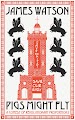
To follow: Talking in Whispers, Ticket to Prague, Justice of the Dagger, Fair Game: The Steps of Odessa and Pigs Might Fly. In preparation: Media History From Gutenberg to the Digital Age and Besieged: The Coils of the Viper.